

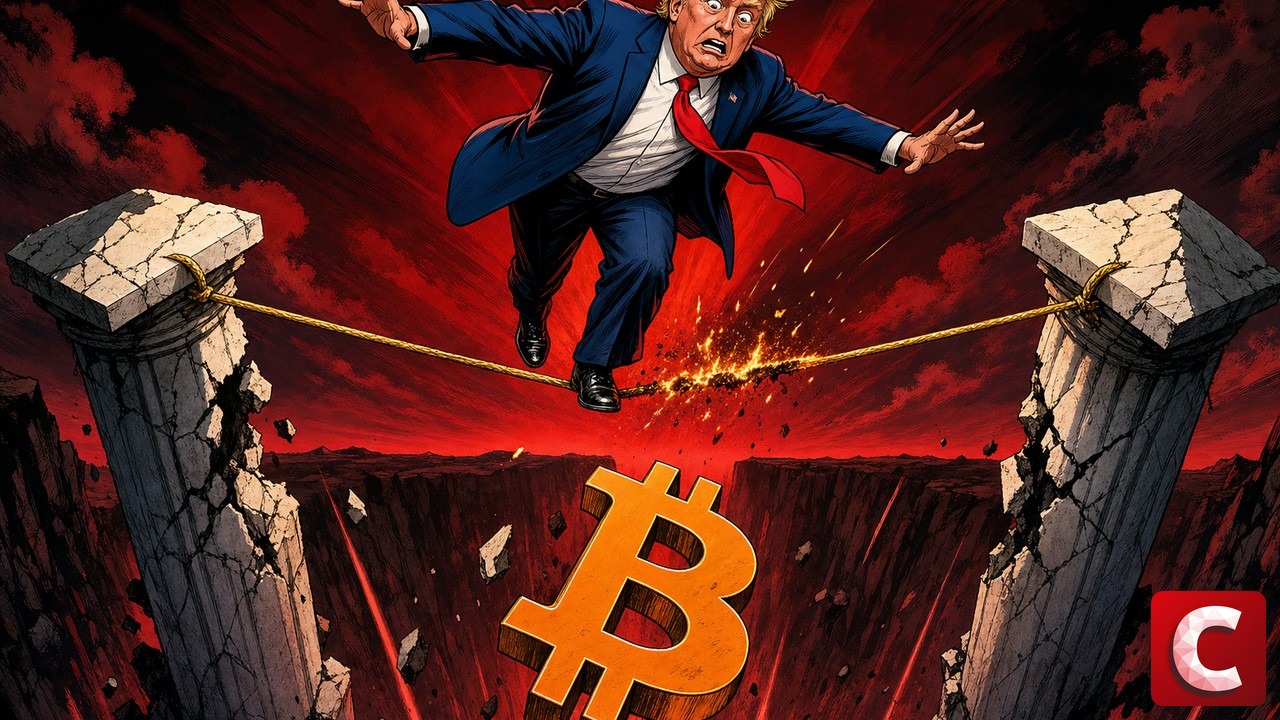
The Iran-US deal was signed electronically yesterday, without the Geneva ceremony that had been on the calendar. Twenty-four hours later, Israeli strikes on Lebanon are still landing, and Tehran is warning that each one breaks the text. Bitcoin drops below $63,000 and $180 million in long positions were wiped out in a single hour. The market is voting for doubt, not peace.
Key Takeaways
- The Iran-US memorandum was signed remotely on June 18, with no in-person Geneva event.
- The text covers Lebanon, but Israeli strikes are still hitting the country and Tehran calls each one a breach.
- Bitcoin dropped back below $63,000, $180M in longs were liquidated in one hour, oil fell 5%.
Get an AI Summary of This Article
ChatGPTA Deal Signed in Downgraded Mode
The signing ceremony was scheduled for June 19 in Geneva, with US Vice President JD Vance attending. It never happened. Washington and Tehran signed the preliminary text electronically on June 18 instead, with a final signature pushed to a 60-day window.
The content of the memorandum is ambitious. Reopening of the Strait of Hormuz within 30 days, with Iran clearing the mines. Iranian commitment to stay away from nuclear weapons. Lifting of US sanctions and release of frozen Iranian assets. A $300 billion envelope for reconstruction and the reopening of Iranian oil exports to global markets. For context, see our earlier piece on Cryptonomic: Bitcoin Below $73K: US Strikes on Iran, $1B Liquidations. The full picture is available in the State Department’s trilateral joint statement between the US, Lebanon and Israel.
One clause matters more than the others for traders: respect for sovereignty and territorial integrity, Lebanon explicitly included. That is the line meant to close the Hezbollah front along with the Iranian one. That clause was tested a month later, when fresh US strikes on Iran pushed bitcoin below $63,000.
As we wrote last week, the announcement of this deal had pushed Bitcoin past $65,000. Five days later, the market is looking at the signature and starting to back away. The downgraded mode of the signing, with no public handshake, set the tone.

Lebanon, the Fault Line of the Memorandum
Israel did not stop its strikes when the text was signed. On June 17, Israeli drones targeted Tyre and the Bint Jbeil district. The IDF also hit Dahiyeh, the southern suburb of Beirut, in response to Hezbollah fire toward Israeli territory. None of that appears in the official timeline of the deal. All of it complicates its execution.
Iranian Foreign Minister Abbas Araghchi drew the red line in plain language. According to his statements, any Israeli attack on Lebanon and any continued occupation of Lebanese territory will be treated as a violation of the memorandum. Tehran is not waiting for a wave of bombings. One strike is enough to trigger the clause.
The problem for markets is that the clause is unilateral. Israel is not a signatory to the Iran-US deal. Washington is supposed to keep Tel Aviv quiet, but no control mechanism has been made public. If the chain breaks, Bitcoin takes the hit first, because it is the only asset open around the clock.
On the Iranian side, the position is hardening. Araghchi hammered that as long as Israeli forces remain on territory occupied during the war, the conflict is not considered over. The 60 days set aside in the memorandum to negotiate the nuclear file are starting to look like a countdown.
Also on Cryptonomic:
- Cynthia Lummis: Bitcoin Can Fix the $39.2T US Debt
- HyperFund: Rodney Burton Pleads Guilty in $1.8B Crypto Scam
- HYPE ETF Flows Hit $172M as Token Tops $76 ATH
Crypto Markets Eat the Doubt First
Bitcoin dropped back below $63,000 overnight, after briefly touching $65,000 last week. Breaking that level set off a familiar chain reaction. $180 million in long positions were liquidated in one hour, a sign of leverage that had been parked on the optimistic side of the deal.
Oil moved alongside, but in the opposite direction. Crude lost 5%, pricing in the prospect of Hormuz reopening and Iranian barrels returning to the market. For Bitcoin, that combination is bad. Cheaper oil eases inflation pressure, which trims one of the strongest macro arguments for a store of value during energy shocks. Oil had spiked the other way days earlier, Iran-Israel tensions lifting crude.
Another signal is coming from the industry itself. According to JPMorgan, 20% of Bitcoin miners are currently below their production cost. A sustained drawdown would push some of them to sell their stack to stay solvent. The risk is not systemic today. It becomes systemic if the price slips toward $60,000 and stays there.
In the short term, the market will trade headline by headline. Every Iranian statement on Lebanon, every additional Israeli strike, every line from Vance or Trump will move the order book. In the medium term, the real question is elsewhere: will the memorandum signed on June 18 survive the 60 days planned to negotiate the nuclear file? If the Lebanese front does not cool down, the answer is no, and Bitcoin will go back to trading raw geopolitical stress. Some see a cycle break, CZ blaming AI and geopolitics for ending the 4-year cycle.
Follow the story on Cryptonomic.



Pingback: Bitcoin Slides as US Strikes on Iran Push Oil to $74 - Cryptonomic
Pingback: Bitcoin Hits $65K on Iran-US Peace Deal - Cryptonomic
Pingback: Bitcoin Slips Below $63,000 on Iran-Israel Oil Spike - Cryptonomic
Pingback: US Treasury: $150B in 8 Days Could Push Bitcoin Even Lower - Cryptonomic