

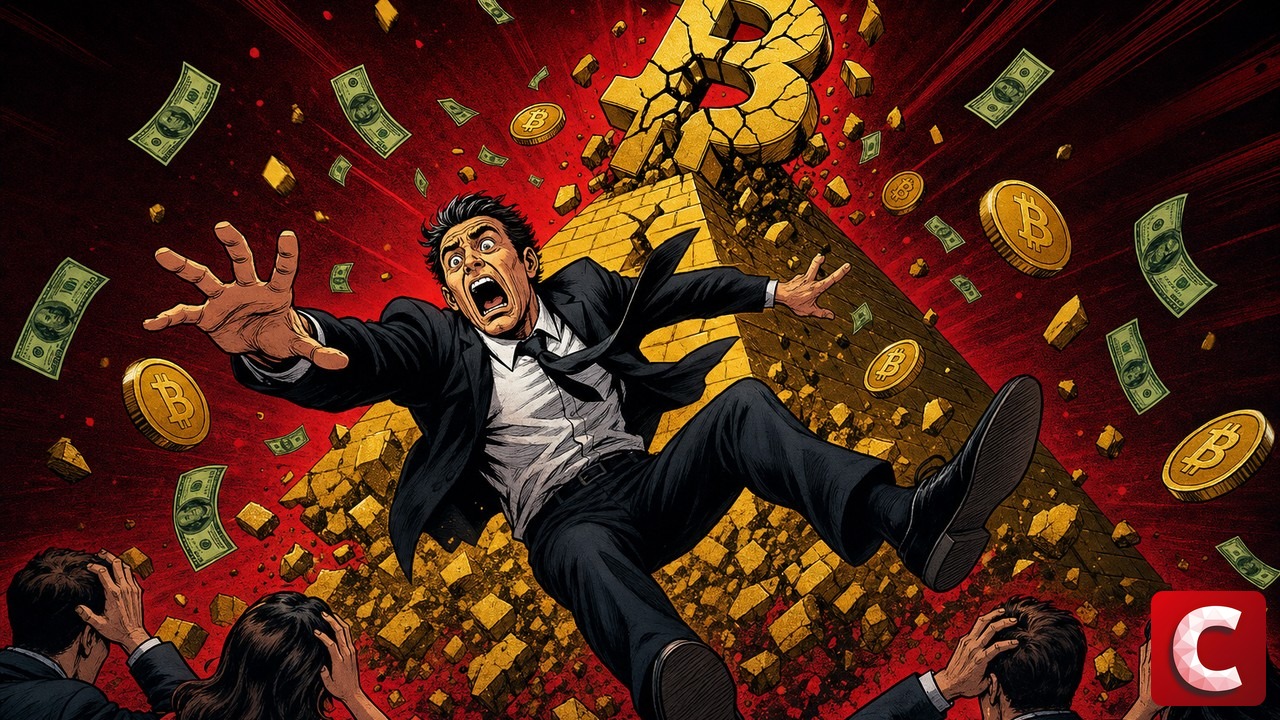
Rodney Burton, 56, better known as “Bitcoin Rodney”, pleaded guilty on June 17, 2026 in the U.S. District Court of Baltimore for his role in the HyperFund scheme, a $1.8 billion fraud operation. He faces up to five years in federal prison and personally pocketed $7.8 million from the operation. Sentencing is scheduled for July 23, 2026 under Judge Richard D. Bennett.
Key Takeaways
- Rodney Burton, aka “Bitcoin Rodney”, pleads guilty in the HyperFund case ($1.8B fraud).
- He admits running an unlicensed money transmitting business between June 2020 and January 2022.
- Maximum sentence: five years in prison, ruling delivered on July 23, 2026 in Baltimore.
Get an AI Summary of This Article
ChatGPTA Baltimore Plea That Closes a Four Year Old File
On June 17, 2026, Rodney Burton admitted his guilt before the U.S. District Court of Baltimore, presided by Judge Richard D. Bennett. The charge is narrow but covers the entire scope of his involvement: conspiracy to operate an unlicensed money transmitting business. A technical qualification, yet broad enough to encompass Burton’s promotional and payment routing role in HyperFund.
Assistant U.S. Attorney Christina A. Hoffman led the prosecution. Court documents describe Burton not as the architect of the scheme but as one of its main public faces in the United States, which is why his case was handled separately from the founders’ prosecution.
Sentencing is set for July 23, 2026. The statutory maximum is five years of imprisonment, and plea deals in this category rarely deliver the floor sentence. The exact term will only be clarified at the July hearing.
For holders who have tracked the case since 2022, this guilty plea closes one of the largest U.S. chapters of the late 2020-2021 crypto pyramid wave. The sequence echoes the broader fraud reckoning, including Sam Bankman-Fried’s recent attempt to defuse his own sentence by formally requesting a pardon from Donald Trump.

HyperFund, or the Impossible Promise of 0.5 to 1% Per Day
HyperFund sold its “memberships” on a promised daily return of 0.5 to 1%, supposedly backed by mining operations that never existed. The yields were in reality funded by fresh deposits, the textbook structure of a Ponzi chain.
The system held as long as inflows exceeded payouts. In 2021, the platform froze withdrawals, the standard exit signal that early depositors recognized too late. Funds collected at the peak were never returned, and the DOJ described the operation as a “sweeping wire-fraud operation” targeting “investors around the world”.
Burton did not design the mechanism. His contribution, central to the U.S. growth of the scheme, was the celebrity facing. He recruited names like Jamie Foxx and Rick Ross to boost his own credibility, and hosted a 2021 Miami crypto conference featuring Draymond Green, Jordan Belfort, Akon and Tiffany Haddish on the stage.
This validation by celebrity is the signature of the most successful pyramid frauds in crypto history. It allowed HyperFund to capture deposits far beyond the insider circle, leveraging the trust generated by recognizable mainstream faces.
Also on Cryptonomic:
- HYPE ETF Flows Hit $172M as Token Tops $76 ATH
- UNI Jumps 12% as Standard Chartered Targets $100 by 2030
- BNB Chain Hits $3.6B in RWA as BNB Stalls Below $617
What HyperFund’s Fall Changes for the Market
The short term price impact is zero. No HyperFund token trades on major exchanges, and the case carries no forced selling pressure comparable to an on chain hack. The actual signal sits elsewhere: the DOJ’s firmness on late 2020-2021 cycle pyramid schemes.
Over a three to six month horizon, similar cases are likely to accelerate. Federal prosecutors have multiplied plea agreements to clear the late bull run fraud backlog and free resources for currently active operators. For holders, this brings welcome clarity on the judicial workload still hanging over the sector.
The other consequence, less visible, touches the liability of public promoters. Burton’s conviction, focused on his promotional role rather than operational control, widens the risk perimeter for media figures who lend their image to dubious platforms. Future schemes will struggle to recruit such ambassadors without serious contractual safeguards.
For experienced investors, the reminder is straightforward: a daily return of 0.5 to 1% backed by unverifiable mining remains, in 2026, the most reliable marker of a fraudulent operation.
Follow the story on Cryptonomic.



Pingback: Bankman-Fried Asks the Supreme Court for a New Trial - Cryptonomic
Pingback: Binance MiCA: ECB to Decide Fate of 37M EU Clients - Cryptonomic
Pingback: Cynthia Lummis: Bitcoin Can Fix the $39.2T US Debt - Cryptonomic