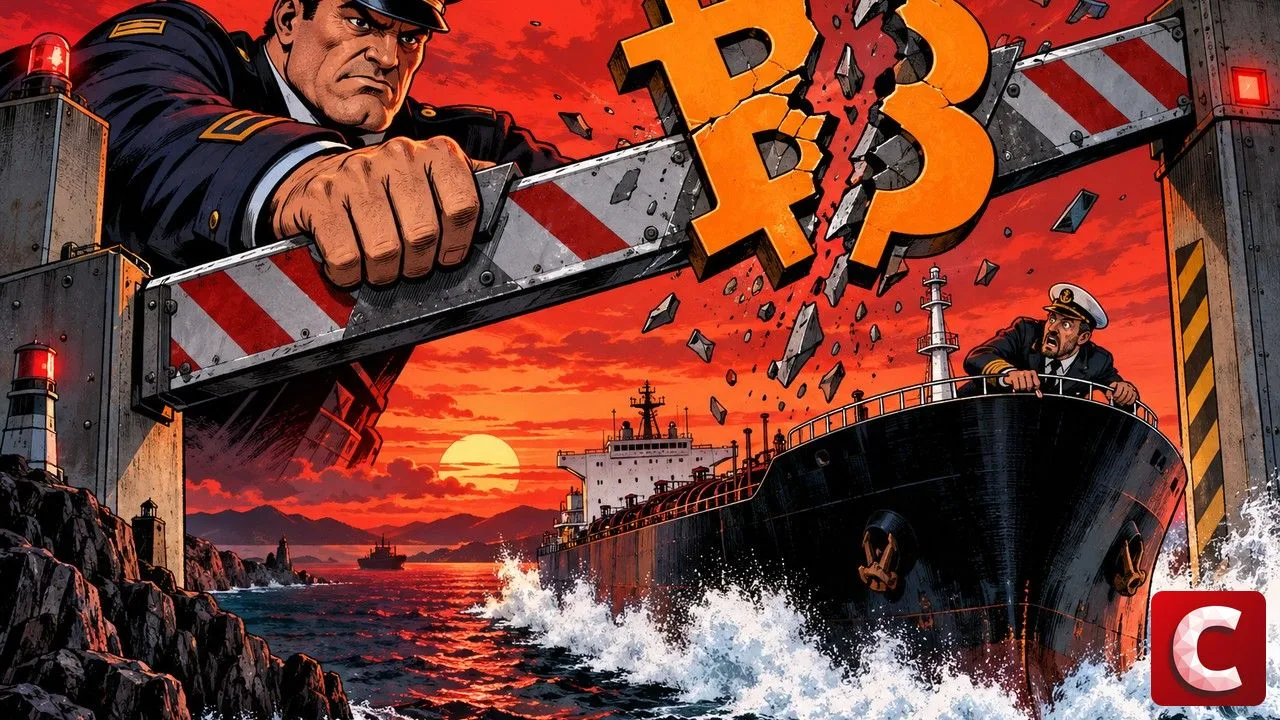
The US Treasury sanctioned the Iranian crypto exchange BitBank on Thursday, alleging it moved hundreds of millions of dollars in bitcoin to the Islamic Revolutionary Guard Corps. The same platform processed payments for Hormuz Safe, the Iranian service that charges tankers for passage through the Strait of Hormuz. BitBank’s developer and three associates of financier Babak Zanjani were designated alongside it.
Key Takeaways
- OFAC designated BitBank, its developer and three associates of Babak Zanjani.
- Hundreds of millions of dollars in bitcoin allegedly reached the IRGC in June and July.
- Hormuz Safe has routed payments through BitBank since June 2026.
Get an AI Summary of This Article
ChatGPTWhat the US Treasury Says BitBank Did
The designation came from the Office of Foreign Assets Control, the US Treasury unit that runs sanctions programs, on Thursday, September 17. BitBank is a Tehran crypto exchange set up in 2024. Its software developer, Pishtaz Simorgh Electronic Trade Company, was named in the same action.
The name invites confusion, so it is worth spelling out. This BitBank has nothing to do with Japan’s bitbank, inc., a separate company operating under an almost identical brand.
Three individuals complete the list: Hossein Ali Zaker Hossein, Mohammad Mahdi Zaker Hossein and Seyed Adel Heidari. The US Treasury describes all three as associates of Babak Zanjani, an Iranian financier who was already under US sanctions. The full set of allegations sits in the Treasury press release on Iranian digital asset infrastructure, issued under the banner of Operation Economic Outcast.
The core allegation covers a short window. Between June and July 2026, Zanjani allegedly used BitBank to move hundreds of millions of dollars in bitcoin to the Islamic Revolutionary Guard Corps. The US Treasury did not put a more precise figure on it. The IRGC is designated as a terrorist organization by the United States, the European Union and other governments.
Treasury Secretary Scott Bessent framed the action as a message as much as a listing. “Today’s designations of Iranian digital asset infrastructure make perfectly clear that efforts to finance the Iranian regime using cryptocurrencies are not beyond OFAC’s reach,” he said. The legal basis is Executive Order 13902, the same authority behind the late August move that named Iran crypto a sanctionable sector. Just over three weeks after that change of framework, a named exchange is on the list.

Hormuz Safe and the Bitcoin Toll Booth
Hormuz Safe Marine Services Authority, an entity the US had already sanctioned, is one of BitBank’s users. Since June 2026 it has relied on the exchange to transfer payments to the Iranian regime. Tankers seeking “safe passage” through the Strait of Hormuz are charged between $1 million and $2 million each.
Cryptonomic readers have followed this scheme from its first week. Back in May, Iran unveiled Hormuz Safe as a bitcoin-settled maritime insurance platform, with pricing announced at up to $2 million per vessel. What the US Treasury adds four months later is the missing piece: the venue that turned those premiums into funds for the IRGC.
The strait has been a pressure point for crypto markets this year. In May, US strikes on Iran near Hormuz sent Bitcoin below $73,000 and triggered close to $1 billion in liquidations. This time the US Treasury is going after the payment rail, and the rail runs on bitcoin.
One detail stands out in the filing. Unlike earlier crypto sanctions actions, the designation lists no cryptocurrency wallet addresses. Compliance teams at exchanges and analytics firms therefore get a name and a developer, without the on-chain identifiers they usually screen against.
The release is also silent on the size of the Hormuz flows. It does not say how much Hormuz Safe collected through BitBank since June, or how many vessels paid for passage. The only figure it offers covers the transfers attributed to Zanjani: hundreds of millions of dollars in bitcoin over roughly two months. The US Treasury has named the pipe without publishing what went through it.
Also on Cryptonomic:
- First Fed Rate Hike Since 2023 Leaves Bitcoin at $76K
- XRP Slides 9.2%, the Hardest Drop Among Majors
- CoinEx Shuts Its Exchange After Nine Years
What Comes Next for Iran’s Crypto Exchanges
The immediate effects follow the usual OFAC script. Any property the targets hold under US jurisdiction is blocked, and US persons are barred from dealing with them. The part that travels furthest is secondary exposure: foreign financial institutions or companies that knowingly facilitate significant dealings with the designated parties risk sanctions of their own, up to being cut off from the US financial system. For a bank or exchange outside the United States, BitBank is now a counterparty with a real cost attached.
BitBank also joins a list that keeps getting longer. Nobitex was sanctioned in June, and Shelbit and Aban Tether followed in August. Wallex, Bitpin and Ramzinex have also been targeted in earlier rounds. In July, US authorities froze more than $130 million in USDT linked to Iran.
Enforcement against crypto rails has been broad this month. On September 10, US prosecutors froze $52 million on a Telegram marketplace, a case that targeted specific funds rather than a whole platform. The BitBank designation works the other way, naming the venue and leaving the flows to be traced.
The late August framework puts this in context. When the US Treasury declared Iran’s crypto sector sanctionable, it had already designated close to 60 entities, with roughly $1 billion seized. BitBank now adds a direct, Treasury-documented link to the Hormuz toll to that record.
The campaign behind it has a clear structure. Economic Fury started in June, and Operation Economic Outcast was announced on August 24. In the short term, BitBank’s users risk losing access to any counterparty that cares about US exposure. Over the next three to six months, the US Treasury has a legal frame built for repeat designations across Iran’s crypto sector, and as long as the Hormuz toll keeps being charged, the question of how those payments settle stays open.
Follow the story on Cryptonomic.