

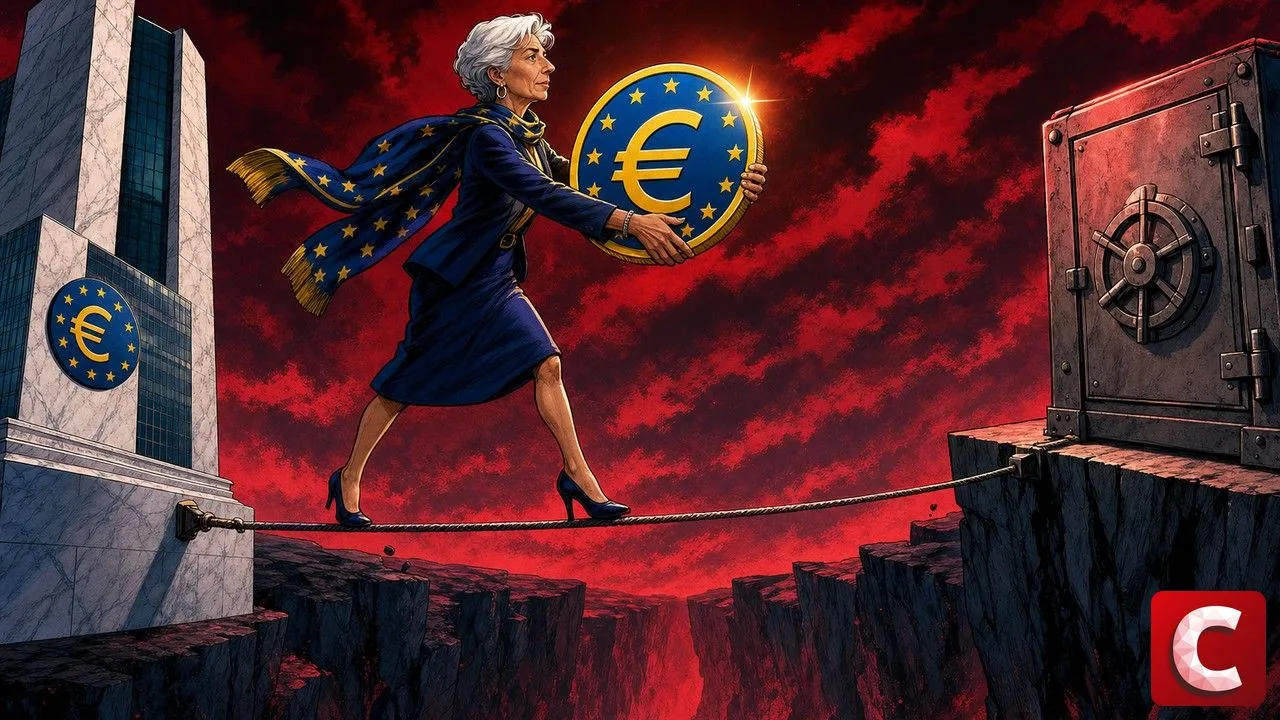
The European Parliament has cleared the digital euro for takeoff. On June 23, 2026, the Economic and Monetary Affairs Committee (ECON) passed its position by 43 votes for, 14 against and 1 abstention. The mandate immediately opens trilogue negotiations with member states, with a public launch targeted for 2029.
Key Takeaways
- ECON vote 43/14/1, trilogues open at once with all 27 EU member states.
- Individual holding cap set by the Commission on ECB advice, reviewed every two years.
- ECB build cost estimated at €1.3B through launch, then €320M annually.
Get an AI Summary of This Article
ChatGPTA technical vote that breaks three years of deadlock
The digital euro file had been stuck for three years between the ECB, Parliament and commercial banks. The June 23 vote ends that standstill. The ECON committee not only validated the legal framework, it also gave an immediate mandate to start trilogue negotiations with the 27 member states.
The text’s rapporteur was explicit: the digital euro will complement physical cash and will never replace it. That political guarantee unlocked the vote. Without it, several parliamentary groups would have refused to back the project.
The next step plays out in July at a plenary session in Strasbourg. Parliament will then formalize the committee’s position. Negotiations with the 27 member states can begin from there, with the Parliament’s stated goal of reaching a final agreement before year-end.
The operational calendar follows directly. A pilot phase starts in 2027 with a restricted group of merchants and payment service providers. The full public rollout targets 2029, with two distinct versions (online and offline) available from day one.

What the digital euro actually changes for users
The online and offline versions work very differently. The online version runs on an account-based system. The offline version stores funds directly on the user’s device, which enables phone-to-phone transfers with no internet connection. That offline brick sets the European project apart from most other CBDCs currently in development.
Privacy relies on zero-knowledge proofs. In practice, the ECB cannot access user identification data during transactions. This architecture answers the surveillance critiques that had blocked the file earlier in the process.
Basic services (account opening, holding funds, routine payments) will be free for both individuals and merchants. The European Commission will set the individual holding cap on the ECB’s advice, with a built-in review every two years. The parameter is crucial because it directly conditions the risk of mass deposit flight from commercial banks.
Banks pushed hard for that strict cap precisely for this reason. A study cited during the debates projected potential €739 billion in deposit flight across Europe with a €3,000 cap. The final number will therefore be politically charged when the ECB issues its recommendation. As with the MiCA decision on Binance expected at the end of June, the ECB becomes the central arbiter between crypto and traditional European finance.
Also on Cryptonomic:
- Bitcoin Oman: State-Mandated Mining Pool Goes Live
- CBDC: US Senate Blocks the Digital Dollar Until 2030
- Bitcoin ETF Outflows Hit Record $6.4B in 30 Days
A geopolitical project, not just a monetary one
The ECB’s stated goal goes well beyond payment modernization. According to ECB data, Visa and Mastercard handle 61% of card payments in the euro area, and almost all cross-border card transactions. The digital euro is explicitly aimed at reducing this dependence on American infrastructure.
The geopolitical angle gets sharper because of the timing. On the same day the European Parliament voted, the US Senate passed its bill banning the Federal Reserve from creating a CBDC for four years. The two blocs are now moving in opposite directions on central bank digital money.
The project also has to deal with private European competition. Wero, the European payment service, already claims 43 million users. That internal competition will be a key issue in the upcoming trilogues. Member states will not want the digital euro rollout to smother a private initiative that is starting to gain real traction.
For the crypto sector, the vote raises two questions. The first concerns the coexistence of private stablecoins (USDC, USDT) with a regulated digital euro. The second touches on use cases: a digital euro with a low cap (€3,000) does not threaten stablecoins on large transfers, but it can capture a meaningful share of daily payments. The cap setting therefore becomes a major watchpoint for the sector over the next two years.
Follow the story on Cryptonomic.



Pingback: Solana Falls to $64, Down 75% Since September - Cryptonomic