

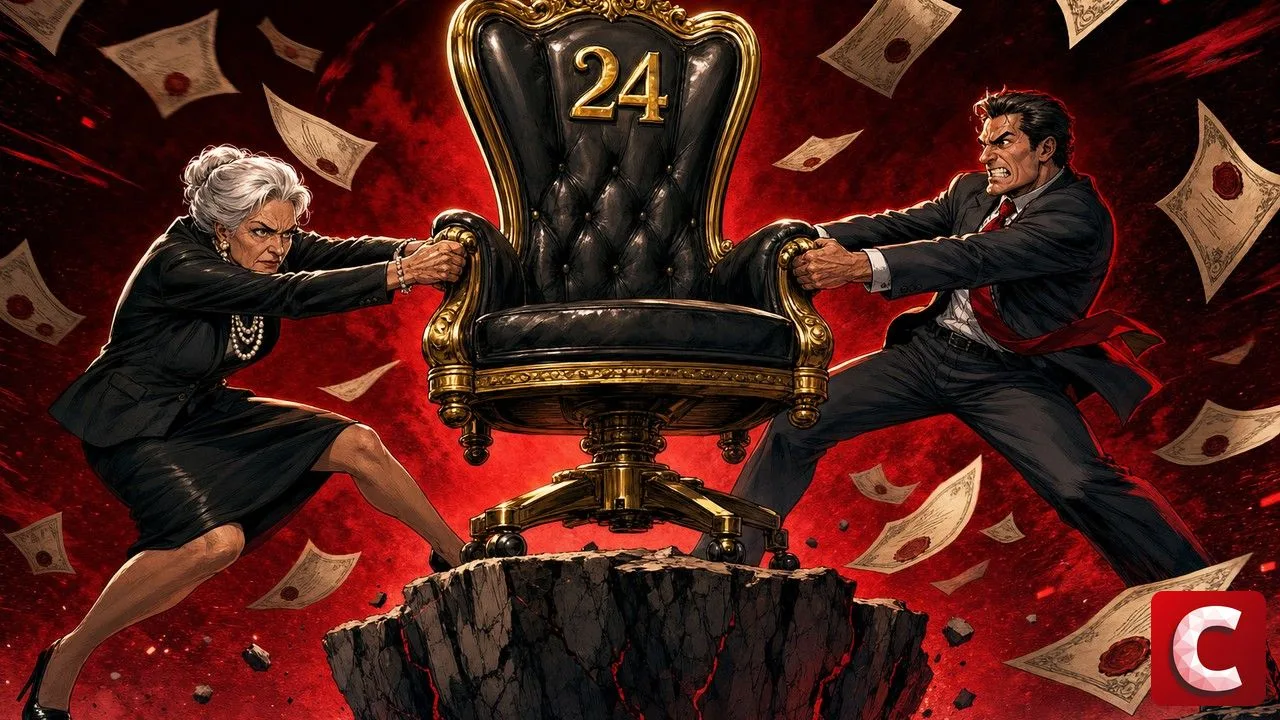
The estate of Nathan Allman, the Ondo Finance founder who died in late May at 32, has gone to a Delaware court to reclaim control of the company. His mother Kathleen Allman accuses former president Ian De Bode of grabbing the chief executive seat while probate froze the controlling voting stake. The ONDO token carries a market value close to $2 billion.
Key Takeaways
- Kathleen Allman is seeking control of Ondo and the removal of Ian De Bode
- The complaint landed July 24 in the Delaware Court of Chancery
- De Bode calls the claims meritless and says stakeholder support is intact
Get an AI Summary of This Article
ChatGPTProbate Froze the Voting Stake for a Month
Nathan Allman held three roles at once: chief executive, sole director, and controlling shareholder. His death in late May, at 32 and with no cause disclosed, emptied all three in a single stroke. The board carried two seats at the time, one of them vacant.
Voting power passed to the estate, but stayed suspended until probate closed. That process wrapped on June 26, when a Hawaii court named Kathleen Allman personal representative of the estate. Between those two dates, the issuer behind a token holders had already been warned about operated with no settled shareholder authority.
That gap is where the dispute sits. The estate argues that before probate concluded, Ian De Bode claimed he had automatically become chief executive under the bylaws. It pushes back that those same bylaws require a board action to appoint a CEO.
The complaint goes further on what followed. De Bode allegedly elected himself sole director through a voting agreement, hired outside advisors, approved performance grants and tried to seat an additional director. Every one of those acts binds the company and will be reopened if the court finds the appointment irregular.

On July 24, the Estate Takes the Board Back
Kathleen Allman started by seeking cooperation. She asked for access to corporate records and for recognition of her authority as the estate’s representative. Both were refused.
So she reached for the shareholder lever. The board went from two seats to four, and on July 24 she voted alongside Tahnee Towill, the founder’s sister and a board member, to remove De Bode from every position. The complaint went to the Delaware Court of Chancery the same day. Gordon Liao, for his part, had declined a board appointment. Governance this contested stands out in a segment where Robinhood Chain crossed $70M in tokenized stocks without institutional noise.
De Bode disputes all of it. He called the proceedings regretful, framed the claims as meritless, and said the company retains the backing of its stakeholders. No ruling has come down yet.
The estate presents Kathleen Allman’s role as temporary. The stated goal is stabilizing governance long enough to recruit a permanent successor, not running a tokenization firm for the long haul.
Also on Cryptonomic:
- XRP Slides as Clarity Act Vote Moves to September
- Binance Sues RedotPay for $473M Over 470,000 Users
- Robinhood Chain Tops $70M in Tokenized Stocks
What Contested Governance Costs an RWA Issuer
Ondo is not a fringe project. The company brings traditional financial products onchain, including US Treasurys, stocks and ETFs, through its USDY and OUSG tokens. Its 2022 Series A raised $20 million from Founders Fund, Coinbase Ventures, Tiger Global and Wintermute, at a time when Coinbase was already pitching itself as the Apple of global finance.
That positioning is exactly what makes the fight dangerous. An issuer of tokenized securities sells legal reliability to institutions before it sells yield, and a public dispute over who legitimately runs the company attacks that pitch head on. The voluntary liquidation RealT announced in Detroit showed how fast confidence drains out of a real-world-backed asset.
Near term, the exposure sits in deals under negotiation. A bank or asset manager weighing USDY or OUSG will wait for the Delaware ruling before signing, for the simple reason that a contested executive’s signature is fragile.
Token holders sit in a different position from equity holders here. ONDO carries no claim on the corporate voting stake being fought over, so the outcome reaches the token only through what the winning side decides to do with the product roadmap and the institutional pipeline. That indirect exposure is hard to hedge and harder to price, which usually shows up as a discount rather than as volatility.
Further out, the case raises a structural question tokenization had not confronted. Concentrating voting rights, executive control and the only board seat in one person creates a total break point on death. Institutions will now read issuer governance as closely as they read reserve attestations.
Follow the story on Cryptonomic.