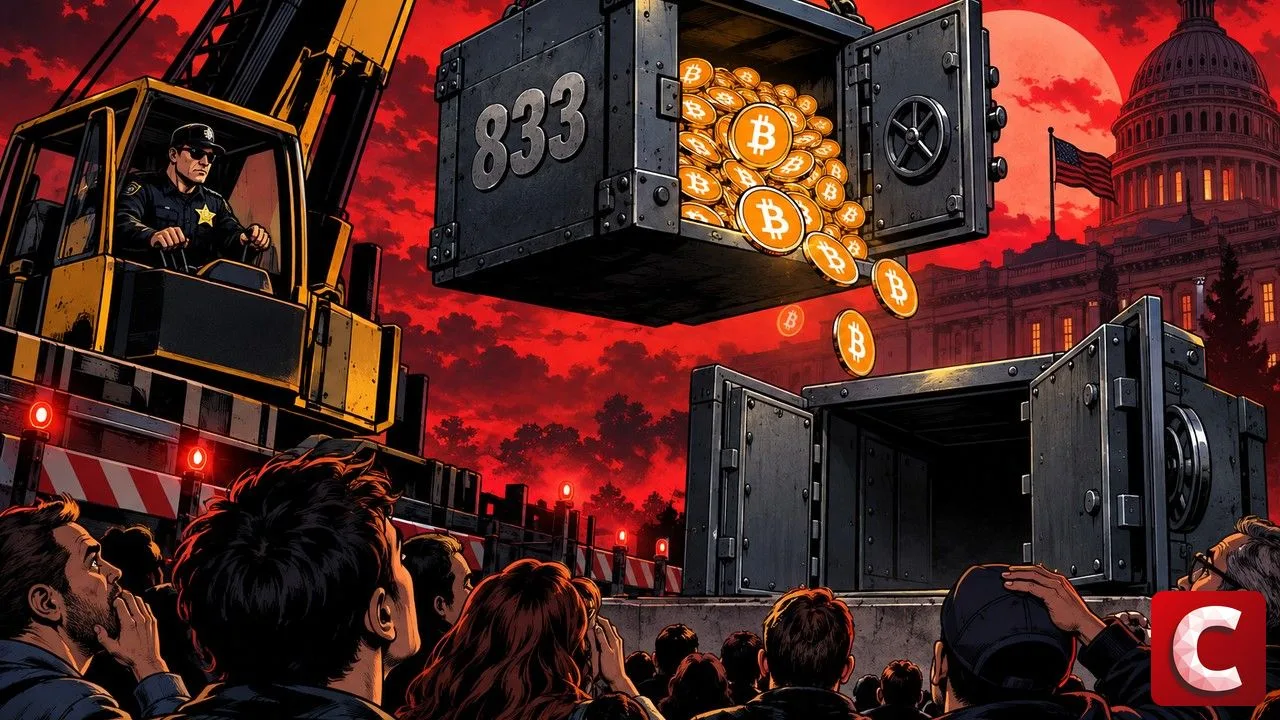
Wallets linked to the US government moved 833.6 BTC of seized bitcoin on October 6, worth about $71M, along with roughly 40,285 BNB. The coins trace back to the 2016 Bitfinex hack and to the HashFlare fraud case. A small test transaction went to Coinbase Prime, but nothing so far confirms a sale.
Key Takeaways
- US government wallets move 833.6 BTC of seized bitcoin and 40,285 BNB, close to $103M in total.
- The coins come from the Bitfinex case (264.86 BTC) and the HashFlare case (568 BTC).
- A March 2025 executive order bars sales of bitcoin placed in the strategic reserve, with carve-outs for crime victims.
Get an AI Summary of This Article
ChatGPT833.6 BTC of Seized Bitcoin Change Wallets in a Single Day
On October 6, addresses attributed to the US federal government sent out 833.6 BTC, worth about $71M, plus roughly 40,285 BNB valued near $31.63M. The combined transfer comes to around $103M. It was the first activity from these wallets since August 26, after six quiet weeks.
On-chain analyst Sani, who founded TimechainIndex, an analytics platform tracking bitcoin held by sovereigns, ETFs and funds, was first to flag the movement. Measured against a federal stash estimated at more than 323,000 BTC, the transfer amounts to 0.26%. That stash on its own is 2.8 times larger than the bitcoin reserves of every other country combined.
Most of the seized bitcoin moved in two blocks. A batch of 264.86 BTC recovered after the 2016 Bitfinex hack went to a fresh address, and a second batch of 568 BTC is tied to the HashFlare case. A test transaction of 0.00115539 BTC was sent to Coinbase Prime, the exchange’s institutional arm.
The BNB took a separate route from the seized bitcoin. Its 40,285 tokens passed through several operations before landing at an address starting with 0xBE7 and ending in 81E, whose owner has yet to be identified.

What the March 2025 Order Allows for Seized Bitcoin
The rules come from the March 6, 2025 executive order creating the Strategic Bitcoin Reserve. Government bitcoin deposited into that reserve cannot be sold and is held as a US reserve asset.
The order also carves out exceptions. Its Section 3(d) lets the government part with forfeited assets when they must be returned to identifiable and verifiable victims of crime, used for law enforcement operations, shared with state and local law enforcement partners, or disposed of under a court order.
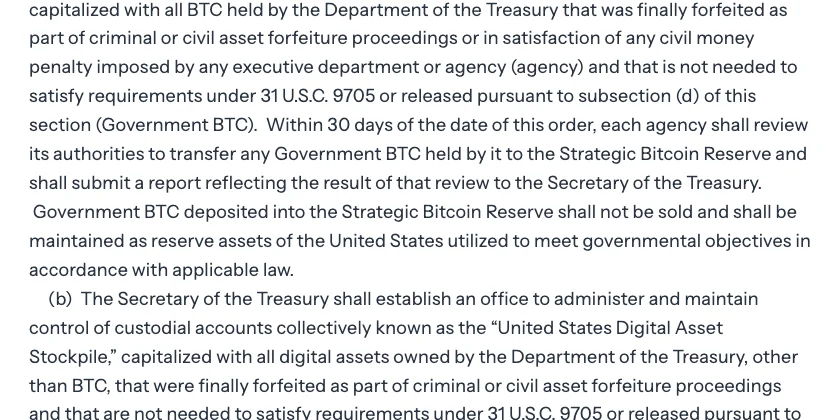
BNB falls into a different bucket. The order places forfeited digital assets other than bitcoin in a separate pool, the US Digital Asset Stockpile, and leaves it to the Treasury Secretary to decide how they are managed.
The reserve itself has moved slowly. By July, sixteen months after the order, the Strategic Bitcoin Reserve had still not acquired a single additional bitcoin, with the Treasury and the Commerce Department still disagreeing over how to proceed. In Congress, a bipartisan bill introduced in May would lock those holdings for 20 years.
Also on Cryptonomic:
- Bitcoin Slips Below $84,000 as Brent Climbs to $101.50
- TRUMP Memecoin Invites 185 Top Holders to Dinner
- A Security Incident Hits MetaMask’s Infrastructure
Bitfinex, HashFlare and Coinbase Prime Behind the Transfer
The 568 BTC batch points to the HashFlare prosecution brought by the US Attorney’s Office for the Western District of Washington. Estonian nationals Sergei Potapenko and Ivan Turõgin sold more than $577M worth of mining contracts between 2015 and 2019. Each was sentenced to 16 months in prison, and the forfeited assets in the case are valued at more than $450M.
The scale of the seizure explains why the process takes time. The indictment covered at least 75 real properties, six luxury vehicles, cryptocurrency wallets and thousands of mining machines, and prosecutors put the total of the schemes tied to the two men at roughly $600M, including at least $25M from a second venture called Polybius.
The Justice Department has hired the administrator RCB to run the victim compensation process, and says the timeline hinges on liquidating the forfeited assets. Moving this seized bitcoin could therefore be a step toward a sale that funds victim payouts, though no official statement confirms it yet. The department says a dedicated claim form and website will open once the liquidation is complete, and that victims will be notified directly.
Coinbase Prime, which received the test transaction, provides both custody and trading for digital assets, so a deposit there can set up safekeeping just as easily as a sale. Transfers of this kind have been misread before. In July, Tim Draper denied being behind a 1,000 BTC transfer to Coinbase Prime that had been linked to his long-held wallet.
For the Bitfinex coins, the order explicitly allows a return to identifiable victims. The next moves from these addresses will show whether the seized bitcoin heads back to the hacked exchange, to a buyer or into a new custody wallet.
Follow the story on Cryptonomic.